LinkedIn outbound
How to sequence LinkedIn outbound without burning your account
A capacity-aware approach to open profiles, connection requests, InMail, email, and deliberate multichannel follow-up.
The short answer
How to sequence LinkedIn outbound without burning your account
Use LinkedIn as one controlled lane inside a multichannel sequence. Route open profiles, standard profiles, email contacts, and high-priority accounts differently, reserve scarce actions for the strongest fits, and keep a human in control of relevance and pacing.
This Seqnced field guide turns that principle into an operating decision. It explains what to define before execution, how Seqnced applies the approach across a real account universe, what to inspect while the campaign is live, and where teams most often lose commercial signal.
01
The real constraint is channel capacity
LinkedIn limits how many new connection requests an account can send. That ceiling matters even when the market and message are strong.
The answer is not reckless automation. It is to route prospects through the doors that are actually available, then reserve scarce actions for the people who deserve them most.
02
Use open profiles as a separate lane
Some premium members allow anyone to message them without a connection. Tagging these profiles during list preparation creates a second route into the inbox without spending a request or paid InMail credit.
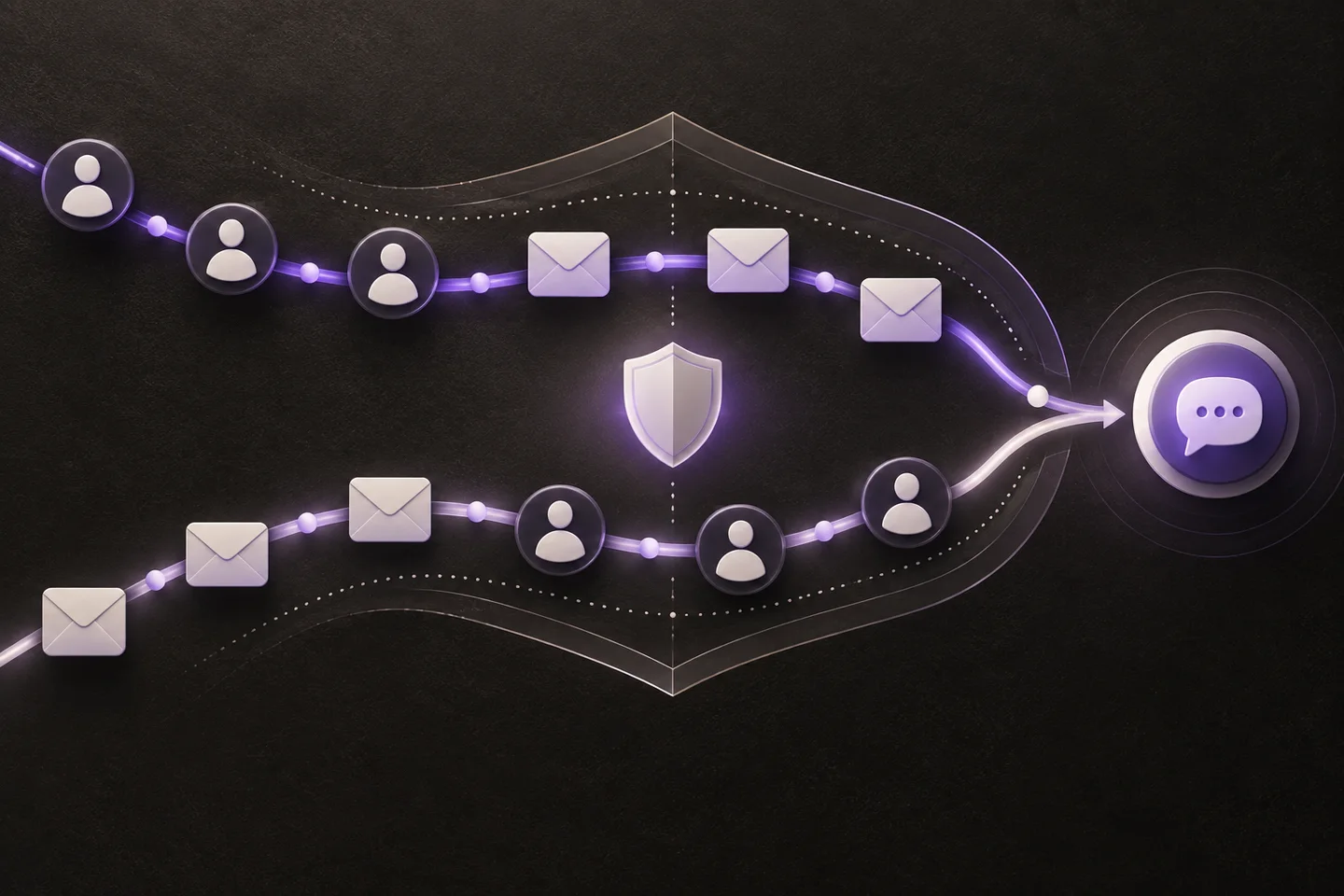
Treat open profiles and standard profiles as two segments. They should not receive the same channel order because their available paths are different.
- Open profiles: direct message, light follow-up, then connection request.
- Other profiles: connection request first, then message after acceptance.
- Use email to support both groups when it is appropriate and verified.
Channel logic
Route by access and capacity
03
Sequence around capacity, not habit
Email generally offers more daily capacity than LinkedIn, while paid InMail is scarce. A sensible sequence uses the higher-capacity, lower-cost channel broadly and saves limited actions for high-value holdouts.
When switching channels, reference the earlier attempt naturally. Continuity makes the second touch feel like a thoughtful follow-up rather than an unrelated blast.
- Give people enough time to see a request before moving on.
- Keep follow-ups short and useful.
- Use paid credits last, on the accounts with the strongest fit.
04
The account is the asset
LinkedIn monitors automated behavior, and aggressive sending can put years of relationships at risk. The durable edge is the strategy: clean segmentation, channel-aware sequencing, and relevant communication.
A system that sends irrelevant messages only scales rejection. Protect the account, keep a human in control, and let relevance determine how far the sequence goes.
Application framework
Turn the idea into an operating plan.
A useful guide should change what the team does next. Convert each principle into a decision, an owner, and evidence that can be reviewed after the campaign reaches the market.
The answer is not reckless automation. It is to route prospects through the doors that are actually available, then reserve scarce actions for the people who deserve them most.
Open profiles: direct message, light follow-up, then connection request.
Give people enough time to see a request before moving on.
A system that sends irrelevant messages only scales rejection. Protect the account, keep a human in control, and let relevance determine how far the sequence goes.
What to measure
Evidence over activity.
- Reachable accounts that match the commercial criteria
- Positive replies separated from neutral or referral replies
- Booked meetings, attended meetings, and qualified opportunities
- Opportunity value and progression after the first conversation
Failure modes
Starting with activity instead of a market thesis
A campaign needs a defined account universe, buyer problem, reason to act, and commercial next step before volume is useful.
Optimizing replies without checking quality
Positive replies matter only when the right accounts attend, qualify, and progress into credible opportunities.
Leaving sales context behind
The handoff should include the account, contact, original angle, stated interest, and expected next step so discovery can continue the conversation.
Key takeaways
The decisions worth carrying forward.
- 01
The real constraint is channel capacity: LinkedIn limits how many new connection requests an account can send. That ceiling matters even when the market and message are strong.
- 02
Use open profiles as a separate lane: Some premium members allow anyone to message them without a connection. Tagging these profiles during list preparation creates a second route into the inbox without spending a request or paid InMail credit.
- 03
Sequence around capacity, not habit: Email generally offers more daily capacity than LinkedIn, while paid InMail is scarce. A sensible sequence uses the higher-capacity, lower-cost channel broadly and saves limited actions for high-value holdouts.
- 04
The account is the asset: LinkedIn monitors automated behavior, and aggressive sending can put years of relationships at risk. The durable edge is the strategy: clean segmentation, channel-aware sequencing, and relevant communication.
Key terms glossary
- Reachable market
- The named accounts and stakeholders that meet the commercial criteria and can realistically be activated.
- Cold-traffic offer
- A clear first-step proposition designed for a buyer who does not already know or trust the company.
- Positive reply
- A response that expresses interest, asks a relevant question, or routes the conversation to the correct stakeholder.
- Qualified opportunity
- A commercial conversation that meets the agreed fit, need, authority, and next-step criteria.
FAQs
Questions teams ask before applying this.
What is the first step in how to sequence linkedin outbound without burning your account?
LinkedIn limits how many new connection requests an account can send. That ceiling matters even when the market and message are strong.
How should a team put this into practice?
Translate the idea into a written operating brief, apply it to a small and representative account segment, review the evidence, and expand only after the team can explain why the result occurred.
What should the team measure?
Measure commercial movement from reachable accounts through positive replies, attended conversations, qualified opportunities, and progression. Add the category-specific quality controls described above.
What is the most common mistake?
A campaign needs a defined account universe, buyer problem, reason to act, and commercial next step before volume is useful.
When should the approach be revised?
Revise it when response quality, objections, attendance, or opportunity progression contradict the original market or offer hypothesis. Change one meaningful variable at a time so the lesson remains visible.
Where does human judgment matter most?
Human judgment should remain responsible for the market thesis, proof, final positioning, sensitive replies, qualification decisions, and every conversation where trust or commercial commitment is at stake. Some premium members allow anyone to message them without a connection. Tagging these profiles during list preparation creates a second route into the inbox without spending a request or paid InMail credit.
Related Seqnced resources
See the capability, market, and proof behind the idea.
Put it into practice
Want this thinking applied to your market?
We build and run the outbound system, from the market thesis and account research through campaign execution and reply routing.
Explore managed B2B outbound systems →