Tools and infrastructure
The B2B outbound technology stack, organized by layer
A category-based guide to market data, enrichment, infrastructure, sequencing, reply management, CRM, reporting, and AI orchestration.
The short answer
The B2B outbound technology stack, organized by layer
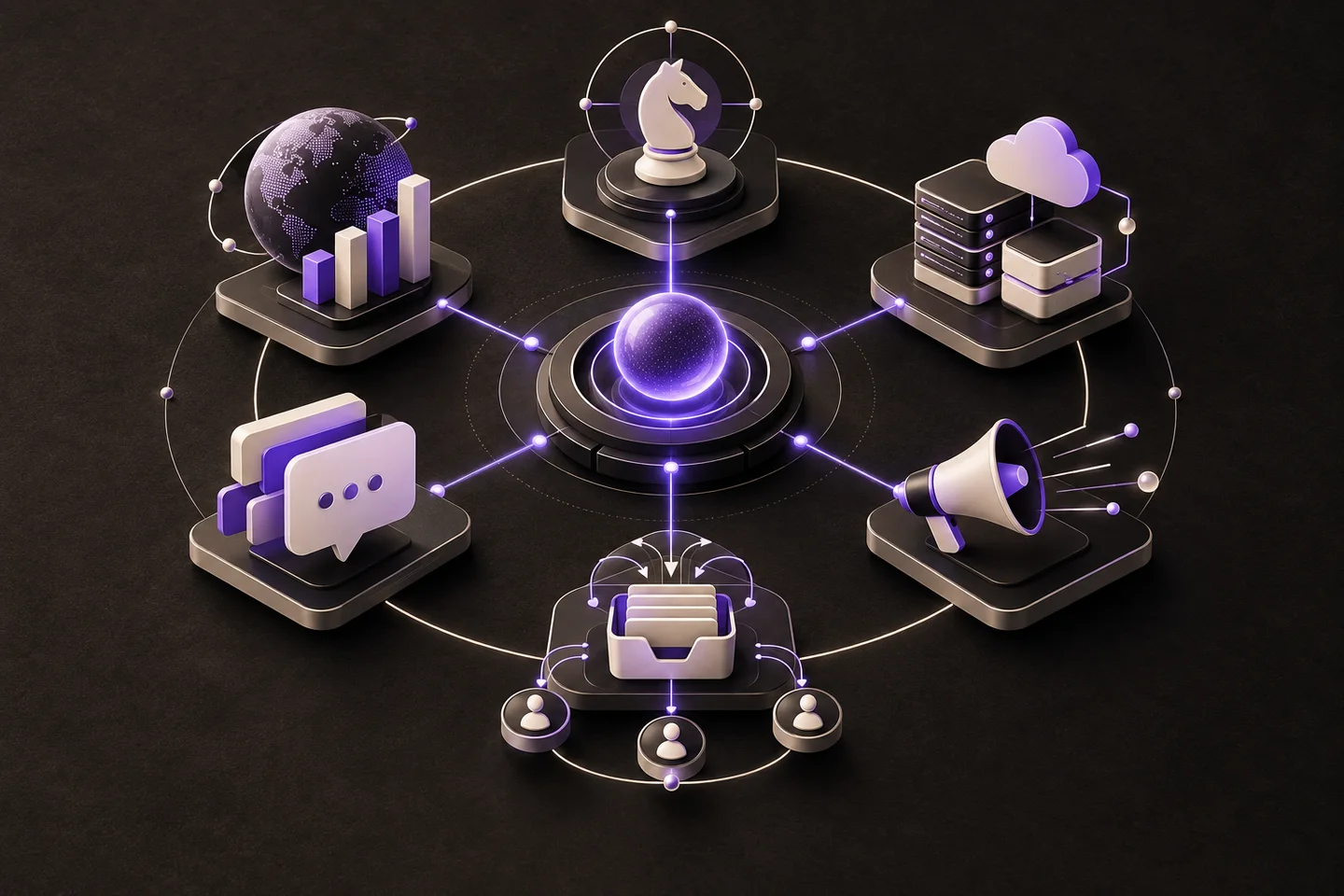
A useful outbound stack is designed around operating layers rather than a collection of popular tools. Define the job performed by market data, enrichment, verification, infrastructure, sequencing, reply routing, CRM, reporting, and AI orchestration, then choose the smallest set that can exchange clean data and preserve accountability.
This Seqnced field guide turns that principle into an operating decision. It explains what to define before execution, how Seqnced applies the approach across a real account universe, what to inspect while the campaign is live, and where teams most often lose commercial signal.
01
Map the operating layers first
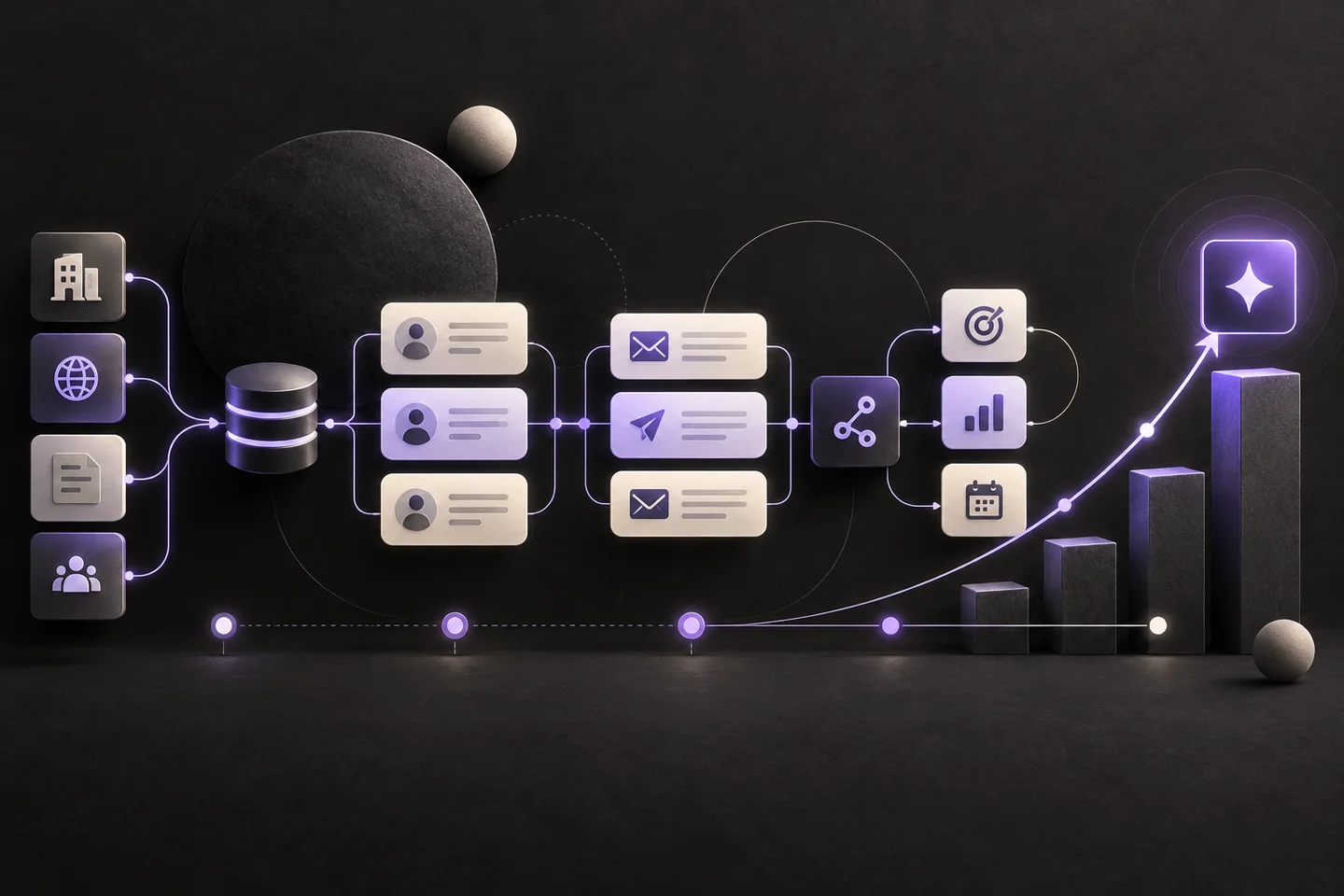
Start with the campaign journey and identify where data enters, changes, receives approval, and creates a sales action. Every tool should have a defined responsibility and owner.
Overlap is expensive because two systems become competing sources of truth.
- Market and account discovery
- Contact enrichment and verification
- Domain and mailbox infrastructure
- Campaign sequencing
- Reply classification and scheduling
- CRM and opportunity management
- Reporting and quality assurance
- AI research and orchestration
02
Choose a source of truth
Accounts, contacts, sources, signals, campaign membership, replies, meetings, and opportunities need stable identifiers. The source of truth can be a CRM or an operating database, but the ownership must be explicit.
Require every integration to preserve source, timestamp, status, and suppression data.
Field guide
The decisions that connect the system
03
Select for control and interoperability
Evaluate export access, API support, permission controls, audit history, data portability, uptime, and total operating cost. A tool that creates a closed workflow can become expensive when the campaign evolves.
The best stack is not the longest list. It is the smallest reliable system the team can understand and operate.
Application framework
Turn the idea into an operating plan.
A useful guide should change what the team does next. Convert each principle into a decision, an owner, and evidence that can be reviewed after the campaign reaches the market.
Market and account discovery
Require every integration to preserve source, timestamp, status, and suppression data.
The best stack is not the longest list. It is the smallest reliable system the team can understand and operate.
What to measure
Evidence over activity.
- Research accuracy on a reviewed sample
- Time saved per approved account
- Classification precision for replies
- Qualified opportunities influenced by the workflow
Failure modes
Automating judgment
AI can organize evidence, but it should not invent claims, decide account fit, or make consequential commercial promises.
Scaling before quality review
A fast workflow multiplies bad inputs. Review a representative sample before moving into production.
Optimizing for unique sentences
Variation is not relevance. Research matters only when it changes the commercial reason for contacting an account.
Key takeaways
The decisions worth carrying forward.
- 01
Map the operating layers first: Start with the campaign journey and identify where data enters, changes, receives approval, and creates a sales action. Every tool should have a defined responsibility and owner.
- 02
Choose a source of truth: Accounts, contacts, sources, signals, campaign membership, replies, meetings, and opportunities need stable identifiers. The source of truth can be a CRM or an operating database, but the ownership must be explicit.
- 03
Select for control and interoperability: Evaluate export access, API support, permission controls, audit history, data portability, uptime, and total operating cost. A tool that creates a closed workflow can become expensive when the campaign evolves.
Key terms glossary
- Human in the loop
- A workflow where a person reviews decisions that affect accuracy, risk, or the prospect relationship.
- Confidence threshold
- The minimum certainty required before an automated classification can trigger an action.
- Grounded research
- Research tied to traceable public evidence instead of unsupported model inference.
- Orchestration
- The controlled movement of data and tasks across research, campaign, inbox, and CRM systems.
FAQs
Questions teams ask before applying this.
What is the first step in the b2b outbound technology stack, organized by layer?
Start with the campaign journey and identify where data enters, changes, receives approval, and creates a sales action. Every tool should have a defined responsibility and owner.
How should a team put this into practice?
Translate the idea into a written operating brief, apply it to a small and representative account segment, review the evidence, and expand only after the team can explain why the result occurred.
What should the team measure?
Measure commercial movement from reachable accounts through positive replies, attended conversations, qualified opportunities, and progression. Add the category-specific quality controls described above.
What is the most common mistake?
AI can organize evidence, but it should not invent claims, decide account fit, or make consequential commercial promises.
When should the approach be revised?
Revise it when response quality, objections, attendance, or opportunity progression contradict the original market or offer hypothesis. Change one meaningful variable at a time so the lesson remains visible.
Where does human judgment matter most?
Human judgment should remain responsible for the market thesis, proof, final positioning, sensitive replies, qualification decisions, and every conversation where trust or commercial commitment is at stake. Accounts, contacts, sources, signals, campaign membership, replies, meetings, and opportunities need stable identifiers. The source of truth can be a CRM or an operating database, but the ownership must be explicit.
Related Seqnced resources
See the capability, market, and proof behind the idea.
Put it into practice
Want this thinking applied to your market?
We build and run the outbound system, from the market thesis and account research through campaign execution and reply routing.
Explore managed B2B outbound systems →