Outbound systems
How to build a cold outreach system that actually books calls
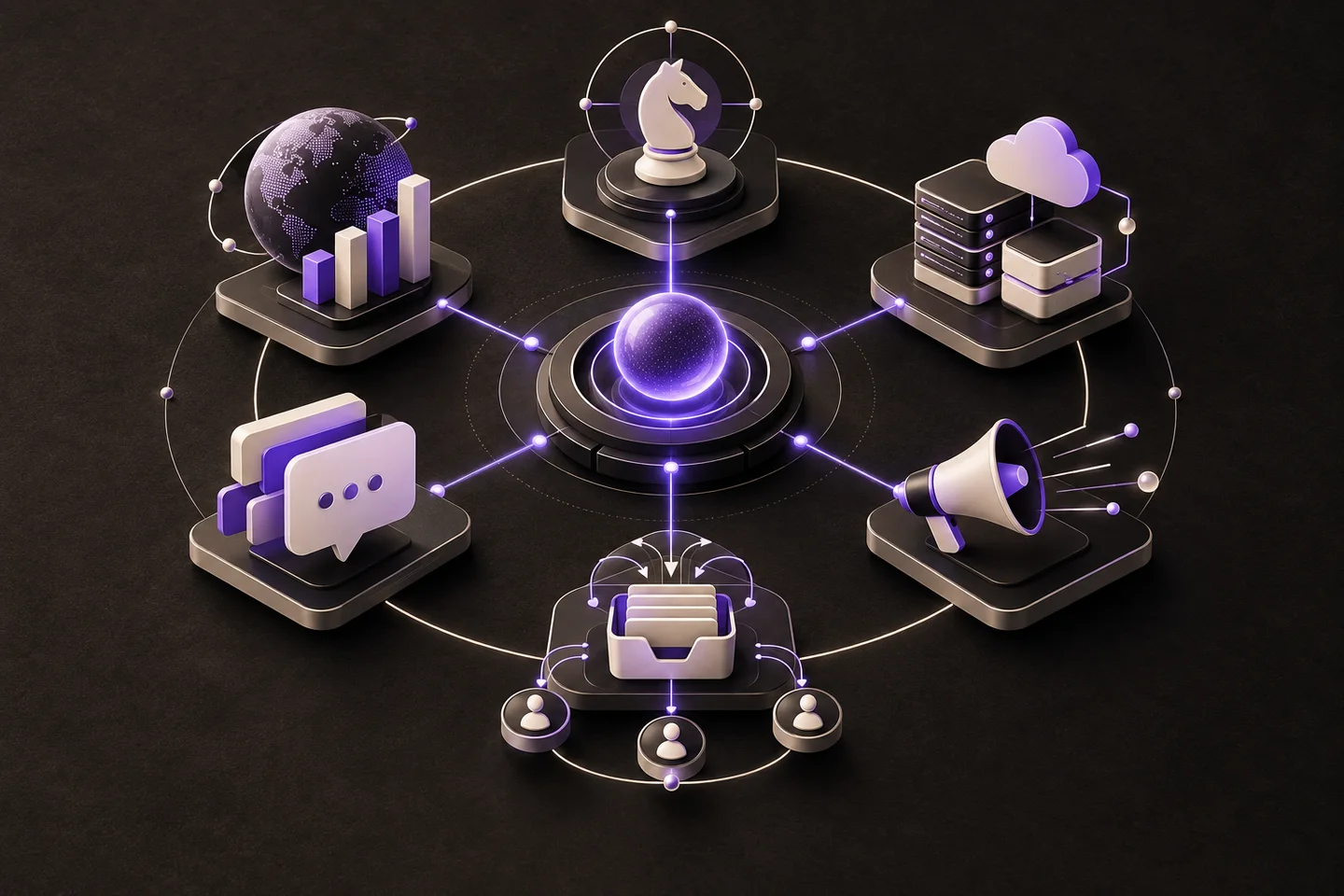
The seven-part system behind a dependable outbound motion: offer, market, timing, message, infrastructure, follow-up, and measurement.
The short answer
How to build a cold outreach system that actually books calls
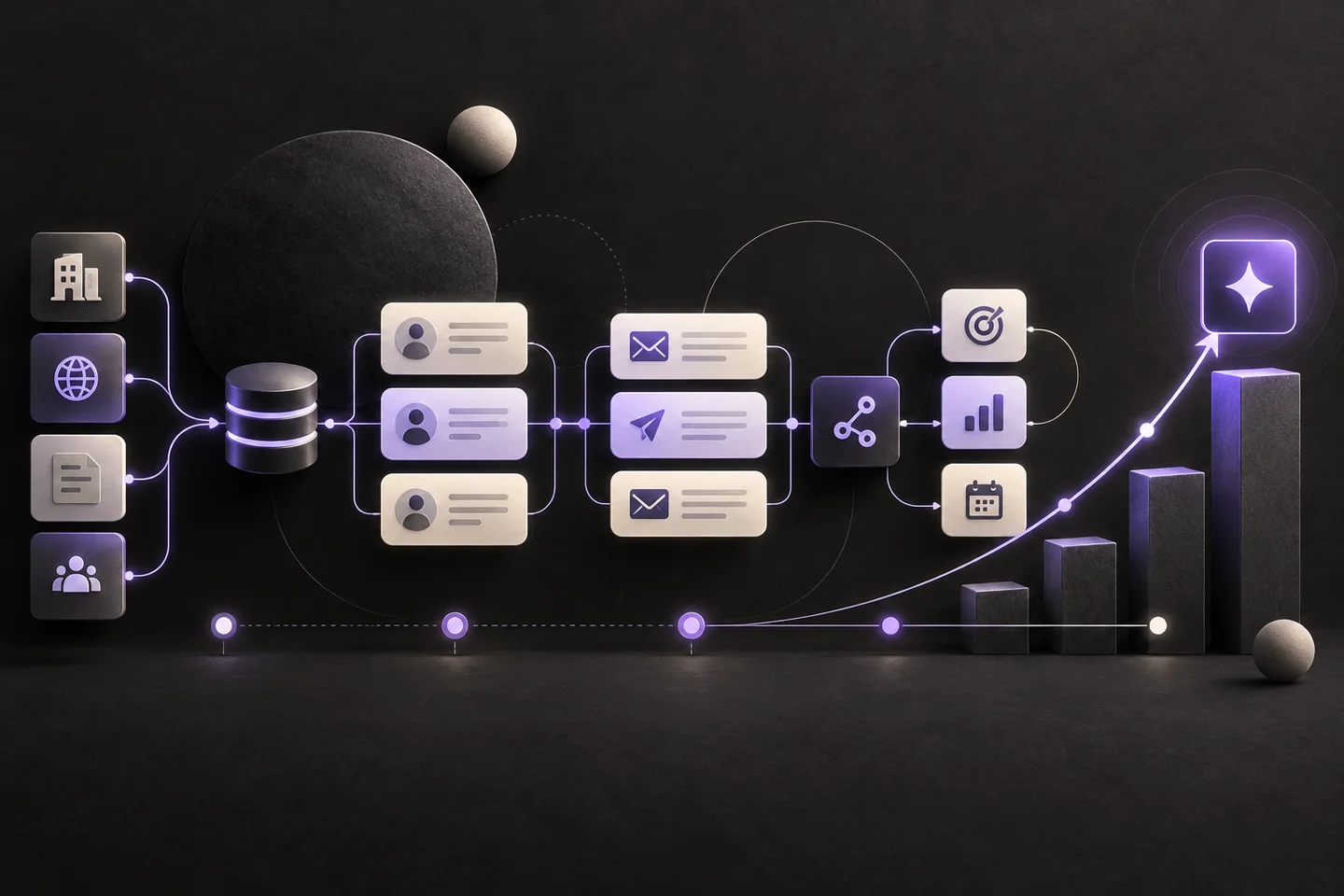
A dependable cold outreach system connects a specific offer, a reachable market, observable timing signals, clear messaging, healthy infrastructure, deliberate follow-up, and full-funnel measurement. Improving email copy alone will not fix weaknesses elsewhere in that chain.
This Seqnced field guide turns that principle into an operating decision. It explains what to define before execution, how Seqnced applies the approach across a real account universe, what to inspect while the campaign is live, and where teams most often lose commercial signal.
01
Start with an offer worth interrupting someone for
Cold prospects do not owe you attention. The offer has to make a specific, expensive problem feel immediately relevant to a specific buyer.
A broad promise creates broad indifference. When the problem, buyer, and outcome are narrow, the list becomes clearer and the message becomes easier to write.
- Name the buyer precisely.
- Tie the offer to a costly or time-sensitive problem.
- Make the first step smaller than the final sale.
02
Build a market, not a database export
No message can rescue the wrong list. Start with role, industry, company size, geography, and the conditions that make an account genuinely relevant.
Then add timing. Hiring patterns, new capital, leadership changes, expansion, and market events can show that a problem is becoming active now. Good outbound reaches the right account during the week the need gets louder.
- Use databases for speed, scraping for specificity, and manual research for hard-to-find markets.
- Validate contact data before it enters a campaign.
- Prioritize recent activity and observable buying signals.
System map
Seven decisions, one connected outcome
03
Write for a reply, not an applause
The first message has one job: earn the next response. Lead with the prospect's situation, prove the outreach is relevant, and make one low-friction ask.
Simple language wins because the reader has invested nothing yet. Remove the company biography, vague compliments, and every sentence that does not help them decide whether to answer.
- Open with the problem or trigger.
- Use one concrete proof point.
- Ask whether it is worth sharing more.
04
Scale the system without burning the channel
Volume only helps after relevance is working. Sending capacity should be spread across healthy infrastructure, ramped gradually, and monitored instead of pushed to the limit on day one.
Follow-up matters because familiarity builds across touches. Change the angle or channel, add context, and let each touch advance the conversation rather than repeating the first email.
- Protect domains and sender accounts as long-term assets.
- Sequence email and LinkedIn around each channel's capacity.
- Stop when a prospect gives a clear no.
05
Measure the funnel end to end
Track the path from accounts activated to positive replies, booked meetings, show-ups, qualified opportunities, and closed business. Activity metrics alone can make a broken campaign look busy.
Once the stages are visible, the team can diagnose the actual constraint: a weak market, an unclear offer, low deliverability, poor show rates, or a sales process that is not converting the conversations.
- Attribute every meeting to its campaign and audience.
- Review quality alongside volume.
- Scale winners only after the full funnel works.
Application framework
Turn the idea into an operating plan.
A useful guide should change what the team does next. Convert each principle into a decision, an owner, and evidence that can be reviewed after the campaign reaches the market.
Name the buyer precisely.
Use databases for speed, scraping for specificity, and manual research for hard-to-find markets.
Open with the problem or trigger.
Protect domains and sender accounts as long-term assets.
Attribute every meeting to its campaign and audience.
What to measure
Evidence over activity.
- Reachable accounts that match the commercial criteria
- Positive replies separated from neutral or referral replies
- Booked meetings, attended meetings, and qualified opportunities
- Opportunity value and progression after the first conversation
Failure modes
Starting with activity instead of a market thesis
A campaign needs a defined account universe, buyer problem, reason to act, and commercial next step before volume is useful.
Optimizing replies without checking quality
Positive replies matter only when the right accounts attend, qualify, and progress into credible opportunities.
Leaving sales context behind
The handoff should include the account, contact, original angle, stated interest, and expected next step so discovery can continue the conversation.
Key takeaways
The decisions worth carrying forward.
- 01
Start with an offer worth interrupting someone for: Cold prospects do not owe you attention. The offer has to make a specific, expensive problem feel immediately relevant to a specific buyer.
- 02
Build a market, not a database export: No message can rescue the wrong list. Start with role, industry, company size, geography, and the conditions that make an account genuinely relevant.
- 03
Write for a reply, not an applause: The first message has one job: earn the next response. Lead with the prospect's situation, prove the outreach is relevant, and make one low-friction ask.
- 04
Scale the system without burning the channel: Volume only helps after relevance is working. Sending capacity should be spread across healthy infrastructure, ramped gradually, and monitored instead of pushed to the limit on day one.
- 05
Measure the funnel end to end: Track the path from accounts activated to positive replies, booked meetings, show-ups, qualified opportunities, and closed business. Activity metrics alone can make a broken campaign look busy.
Key terms glossary
- Reachable market
- The named accounts and stakeholders that meet the commercial criteria and can realistically be activated.
- Cold-traffic offer
- A clear first-step proposition designed for a buyer who does not already know or trust the company.
- Positive reply
- A response that expresses interest, asks a relevant question, or routes the conversation to the correct stakeholder.
- Qualified opportunity
- A commercial conversation that meets the agreed fit, need, authority, and next-step criteria.
FAQs
Questions teams ask before applying this.
What is the first step in how to build a cold outreach system that actually books calls?
Cold prospects do not owe you attention. The offer has to make a specific, expensive problem feel immediately relevant to a specific buyer.
How should a team put this into practice?
Translate the idea into a written operating brief, apply it to a small and representative account segment, review the evidence, and expand only after the team can explain why the result occurred.
What should the team measure?
Measure commercial movement from reachable accounts through positive replies, attended conversations, qualified opportunities, and progression. Add the category-specific quality controls described above.
What is the most common mistake?
A campaign needs a defined account universe, buyer problem, reason to act, and commercial next step before volume is useful.
When should the approach be revised?
Revise it when response quality, objections, attendance, or opportunity progression contradict the original market or offer hypothesis. Change one meaningful variable at a time so the lesson remains visible.
Where does human judgment matter most?
Human judgment should remain responsible for the market thesis, proof, final positioning, sensitive replies, qualification decisions, and every conversation where trust or commercial commitment is at stake. No message can rescue the wrong list. Start with role, industry, company size, geography, and the conditions that make an account genuinely relevant.
Related Seqnced resources
See the capability, market, and proof behind the idea.
Put it into practice
Want this thinking applied to your market?
We build and run the outbound system, from the market thesis and account research through campaign execution and reply routing.
Explore managed B2B outbound systems →