Outbound strategy
Cold email vs cold calling for B2B: which channel wins?
An honest comparison of cold email and cold calling for high-value B2B sales, covering reply rates, reach rates, compliance rules and buyer preferences.
The short answer
Cold email vs cold calling for B2B: which channel wins?
Neither channel wins outright. Cold email scales reach cheaply but averages low reply rates, while cold calling converts a small share of connects into meetings but costs far more time per touch. In complex B2B sales the channels work best in sequence: email and LinkedIn to earn engagement, then a warm call after a positive reply.
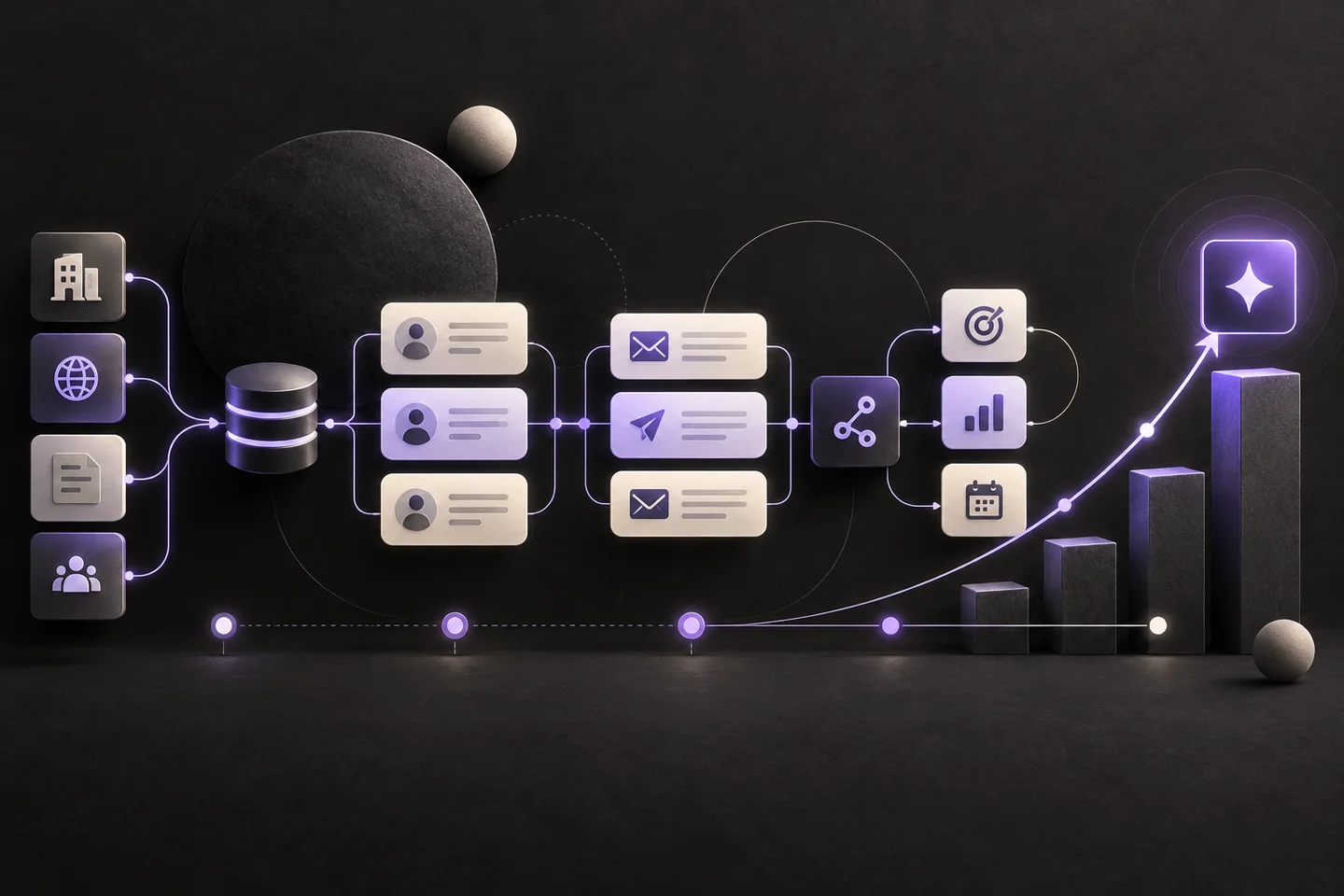
This Seqnced field guide turns that principle into an operating decision. It explains what to define before execution, how Seqnced applies the approach across a real account universe, what to inspect while the campaign is live, and where teams most often lose commercial signal.
01
What do cold email and cold calling actually deliver?
Start with the numbers, stated plainly. According to Instantly's Cold Email Benchmark Report 2026, the overall average cold email reply rate is 3.43%, with top performers exceeding 10%. The same report found that 58% of all replies come from the first email in a sequence, which means follow-ups still produce roughly 42% of replies.
Cold calling converts less often but at a different point in the funnel. In 2018 data, Gong Labs analyzed 90,380 outbound, connected cold calls and found the average success rate as low as 1.48%, where success meant a held follow-up meeting. Gong also found successful cold calls were almost twice as long as unsuccessful ones, which points to preparation mattering more than volume.
Cognism's State of Cold Calling in 2026, based on over 200,000 analyzed calls, reports the industry average cold calling success rate climbed to 2.7%, up from 2.3% the prior year, with 1.55 calls now the average needed to reach a prospect. Cognism sells phone data and its own team's rate is 11.3%, so read those figures as vendor-reported.
- Average cold email reply rate: 3.43% (Instantly, 2026)
- Cold call to held-meeting rate: about 1.5% to 2.7% (Gong Labs; Cognism 2026)
- 58% of email replies come from the first send (Instantly)
- 1.55 calls on average to reach a prospect (Cognism)
02
What does each channel cost in time?
Email is cheap per touch. Once infrastructure and list quality are in place, a rep can put well-researched messages in front of hundreds of the right people per week. The cost shows up elsewhere: deliverability management, list building, and writing messages that do not read like templates.
Calling is expensive per touch but richer per conversation. Even with Cognism's figure of 1.55 calls needed just to reach a prospect, a meaningful calling block consumes hours for a handful of live conversations. Gong's data that successful calls run nearly twice as long as unsuccessful ones suggests the payoff goes to reps who prepare before dialing.
The practical trade: email buys reach, calling buys depth. High-value B2B deals with buying committees usually need both, which is why HubSpot's 2025 State of Cold Calling Report found 73% of sales professionals combine email with cold calling.
- Email scales reach; calling scales conversation quality
- 55% of reps make 3 to 5 call attempts before moving on (HubSpot, 2025)
- 73% of sales professionals combine email with cold calling (HubSpot, 2025)
Field guide
The decisions that connect the system
03
Which channel do buyers actually prefer?
A RAIN Group study of 488 buyers and 489 sellers found that buyers prefer email and receive plenty of it, while the phone remains essential, especially for senior buyers. According to that study, 70% of sellers attempt to connect with buyers by phone, second only to email, and C-level and VP buyers prefer the phone more (57%) than directors (51%) or managers (47%).
The same study found 82% of buyers accept meetings at least sometimes with sellers who reach out, and 71% of buyers who accept meetings want to hear from sellers early in their buying process. Note this study dates to 2017, so treat it as directional rather than current.
Personalization is the gate for both channels. LinkedIn's 2018 State of Sales report found 79% of buyers will not engage with sales professionals who lack knowledge of their company, and 93% of buyers are more likely to engage when a salesperson provides personalized communications. A generic email and a generic dial fail for the same reason.
- Buyers prefer email but senior buyers lean phone (RAIN Group)
- 82% of buyers accept meetings with sellers who reach out at least sometimes (RAIN Group)
- 93% of buyers engage more with personalized outreach (LinkedIn State of Sales, 2018)
04
How many touches does it take to book a meeting?
Sequences exist because the first touch rarely lands at the right moment. LinkedIn's B2B Institute with Ehrenberg-Bass describes the 95-5 rule: 95% of your potential buyers are not ready to buy today.
RAIN Group found that even 53% of top performers need five or more touches to generate a conversion for new accounts. Top performers connect after three touches 27% of the time, against 17% for everyone else, so persistence plus quality compounds.
This is the strongest argument against the either/or framing. If most conversions take five or more touches across channels, the real question is not email versus calling. It is what order the touches should run in.
- 95% of buyers are not ready to buy today (LinkedIn B2B Institute, 95-5 rule)
- 53% of top performers need 5+ touches for a new-account conversion (RAIN Group)
- 55% of reps make 3 to 5 call attempts before moving on (HubSpot, 2025)
05
Is cold email and cold calling legal for B2B?
For US email, yes, but CAN-SPAM applies fully. The FTC states the law makes no exception for business-to-business email, and each separate email in violation is subject to penalties of up to $53,088. Requirements include an accurate subject line, accurate header information, a valid physical postal address, a clear opt-out explanation, and honoring opt-outs within 10 business days. CAN-SPAM is opt-out, so no consent is required before the first email.
For US calling, the regimes differ. The FTC says most phone calls between a telemarketer and a business are exempt from the Telemarketing Sales Rule, and most business-to-business solicitation calls are exempt from Do Not Call provisions. The FCC enforces the separate Telephone Consumer Protection Act, and its guidance says callers and texters soliciting consumers' business must obtain prior express written consent to robocall or robotext. In practice, most live B2B calls fall outside the FTC's Do Not Call provisions, but check TCPA rules with counsel before using autodialers, prerecorded messages or texts.
In the EU, the European Commission confirms legitimate interest is a lawful basis for processing, including direct marketing, but only after checking that the individual's rights are not seriously impacted. Individuals have a right to object at any time to direct marketing, and you must inform them at the latest at the time of first communication that their data will be used for marketing and that they can object free of charge. GDPR also sits alongside national ePrivacy rules that vary by country, so check local rules before sending into Europe.
- CAN-SPAM covers B2B email; penalties up to $53,088 per email (FTC)
- Most live B2B calls to business lines are outside FTC DNC rules (FTC)
- Robocalls and robotexts to consumers need prior express written consent under the TCPA (FCC)
- GDPR legitimate interest can cover B2B outreach, with a right to object (European Commission)
06
Where does each channel win in high-value B2B?
Cold email wins on reach and research. In markets like aerospace and defense, manufacturing, logistics and financial services, where deal sizes run into five and six figures and buying committees are involved, the bottleneck is getting the right message to the right people at the right account. Email, backed by solid sending infrastructure and genuine account research, does that at scale.
Cold calling works better with senior buyers and when speed matters. RAIN Group's finding that C-level and VP buyers prefer the phone more than other levels matters when your deal needs an executive sponsor. A live conversation also surfaces objections and buying signals that a reply email will not.
The failure mode in both channels is the same: generic outreach. LinkedIn's State of Sales data on buyers refusing to engage with sellers who lack company knowledge applies equally to a templated email and a scripted dial. Research quality is the multiplier on both channels.
- Email: reach, scale, cheap testing of messaging
- Calling: senior buyers, live objection handling
- Both channels depend on knowing the account before you reach out
07
Should you use both channels, and in what order?
The evidence points to sequence, not either/or. HubSpot found 73% of sales professionals combine email with cold calling, and RAIN Group found most conversions need five or more touches. The question is ordering.
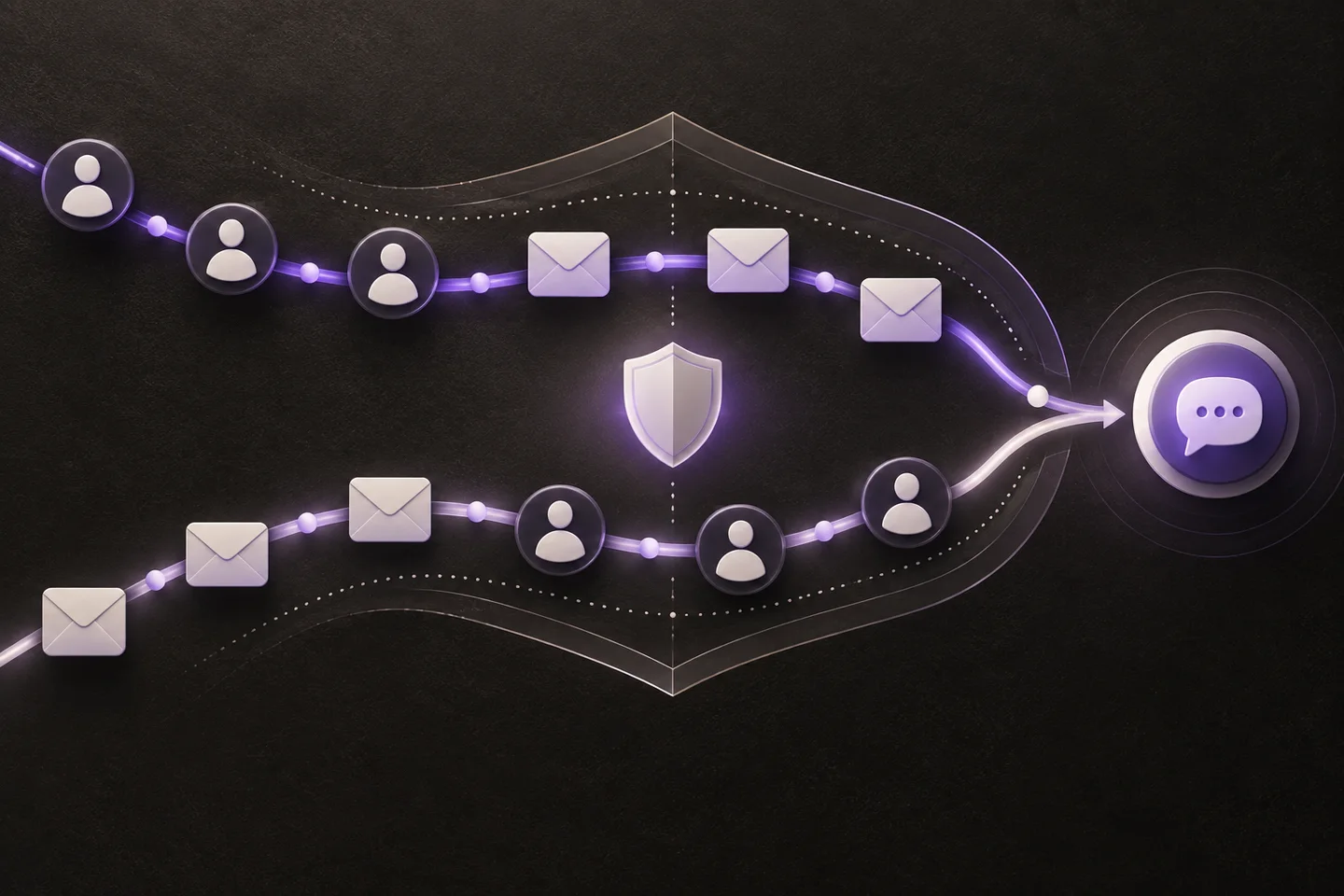
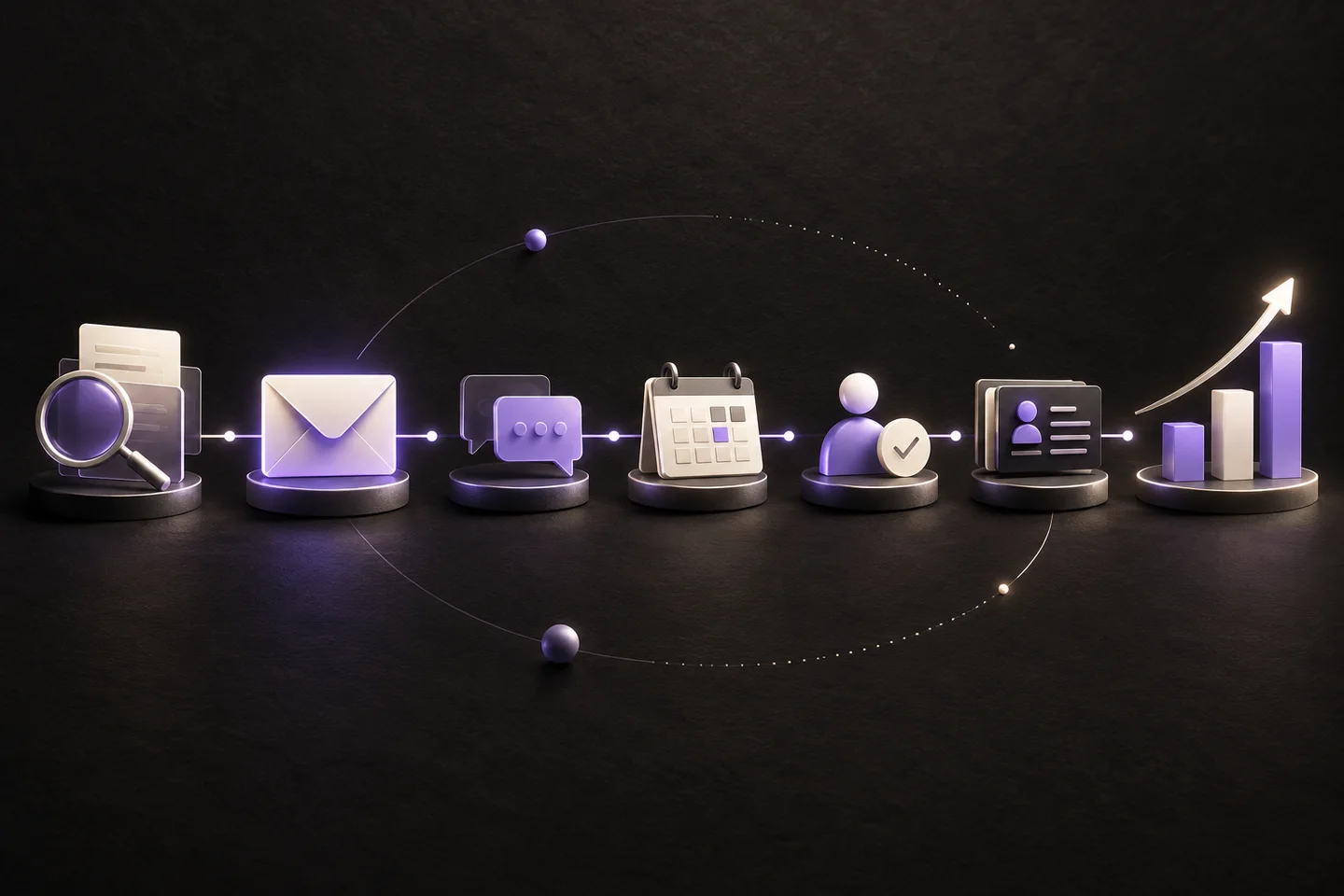
A sequence that fits complex B2B: researched email and LinkedIn touches first, to earn a reply or visible engagement. Then a call, ideally after positive engagement, so the conversation starts warm instead of cold. This is how Seqnced operates its outbound systems: email and LinkedIn to earn the reply, then a warm call after a positive response, followed by reply qualification and a clean handoff to sales.
Seqnced publishes this comparison as an agency that builds and operates these systems end to end, from market mapping and dedicated sending infrastructure through pre-call nurture. In founder Remo Duzkale's operating experience across more than 10 million outbound emails and more than 100 campaigns, the channels are complements. Email fills the top of the sequence; the phone closes the gap once a buyer has raised a hand.
- Email and LinkedIn first to earn engagement
- Warm call after a positive reply, not a cold dial into a list
- Qualify replies before they reach your sales team
- Sequence design matters more than channel choice
Application framework
Turn the idea into an operating plan.
A useful guide should change what the team does next. Convert each principle into a decision, an owner, and evidence that can be reviewed after the campaign reaches the market.
Average cold email reply rate: 3.43% (Instantly, 2026)
Email scales reach; calling scales conversation quality
Buyers prefer email but senior buyers lean phone (RAIN Group)
95% of buyers are not ready to buy today (LinkedIn B2B Institute, 95-5 rule)
CAN-SPAM covers B2B email; penalties up to $53,088 per email (FTC)
Email: reach, scale, cheap testing of messaging
Email and LinkedIn first to earn engagement
What to measure
Evidence over activity.
- Reachable accounts that match the commercial criteria
- Positive replies separated from neutral or referral replies
- Booked meetings, attended meetings, and qualified opportunities
- Opportunity value and progression after the first conversation
Failure modes
Starting with activity instead of a market thesis
A campaign needs a defined account universe, buyer problem, reason to act, and commercial next step before volume is useful.
Optimizing replies without checking quality
Positive replies matter only when the right accounts attend, qualify, and progress into credible opportunities.
Leaving sales context behind
The handoff should include the account, contact, original angle, stated interest, and expected next step so discovery can continue the conversation.
Key takeaways
The decisions worth carrying forward.
- 01
What do cold email and cold calling actually deliver?: Start with the numbers, stated plainly. According to Instantly's Cold Email Benchmark Report 2026, the overall average cold email reply rate is 3.43%, with top performers exceeding 10%. The same report found that 58% of all replies come from the first email in a sequence, which means follow-ups still produce roughly 42% of replies.
- 02
What does each channel cost in time?: Email is cheap per touch. Once infrastructure and list quality are in place, a rep can put well-researched messages in front of hundreds of the right people per week. The cost shows up elsewhere: deliverability management, list building, and writing messages that do not read like templates.
- 03
Which channel do buyers actually prefer?: A RAIN Group study of 488 buyers and 489 sellers found that buyers prefer email and receive plenty of it, while the phone remains essential, especially for senior buyers. According to that study, 70% of sellers attempt to connect with buyers by phone, second only to email, and C-level and VP buyers prefer the phone more (57%) than directors (51%) or managers (47%).
- 04
How many touches does it take to book a meeting?: Sequences exist because the first touch rarely lands at the right moment. LinkedIn's B2B Institute with Ehrenberg-Bass describes the 95-5 rule: 95% of your potential buyers are not ready to buy today.
- 05
Is cold email and cold calling legal for B2B?: For US email, yes, but CAN-SPAM applies fully. The FTC states the law makes no exception for business-to-business email, and each separate email in violation is subject to penalties of up to $53,088. Requirements include an accurate subject line, accurate header information, a valid physical postal address, a clear opt-out explanation, and honoring opt-outs within 10 business days. CAN-SPAM is opt-out, so no consent is required before the first email.
Key terms glossary
- Reachable market
- The named accounts and stakeholders that meet the commercial criteria and can realistically be activated.
- Cold-traffic offer
- A clear first-step proposition designed for a buyer who does not already know or trust the company.
- Positive reply
- A response that expresses interest, asks a relevant question, or routes the conversation to the correct stakeholder.
- Qualified opportunity
- A commercial conversation that meets the agreed fit, need, authority, and next-step criteria.
FAQs
Questions teams ask before applying this.
Is cold email or cold calling better for B2B?
Neither is better on its own. Email averages a 3.43% reply rate according to Instantly's 2026 benchmark report, while Gong Labs found cold calls convert about 1.5% of connected calls into held meetings. In complex B2B sales they work best in sequence, with email earning the engagement and a warm call following a positive reply.
Is cold calling dead in 2026?
No. Cognism's State of Cold Calling in 2026 reports the industry average success rate rose to 2.7%, up from 2.3% the prior year, and RAIN Group found senior buyers prefer the phone more than other levels. Calling is harder than it used to be, but it still works, especially after a buyer has engaged.
What is a good cold email reply rate?
According to Instantly's Cold Email Benchmark Report 2026, the overall average reply rate is 3.43%, with top performers exceeding 10%. If you are below the average, list quality and personalization are usually the problem, not the channel.
Is cold email legal for B2B in the US?
Yes, under CAN-SPAM, which the FTC says applies with no exception for business-to-business email. You need an accurate subject line and headers, a physical postal address, a clear opt-out mechanism, and you must honor opt-outs within 10 business days. Penalties run up to $53,088 per violating email.
How many touches does it take to book a meeting?
RAIN Group found that even 53% of top performers need five or more touches to generate a conversion for new accounts. LinkedIn's B2B Institute adds that 95% of potential buyers are not ready to buy today, which is why patient, multi-channel sequences outperform single-shot outreach.
Sources
Where the numbers come from.
Statistics and facts in this guide are taken from the publications below. Figures reflect each source at the time of review and may since have been updated.
- FTC, CAN-SPAM Act: A Compliance Guide for Business↗
- FTC, Complying with the Telemarketing Sales Rule↗
- FTC, Q&A for Telemarketers & Sellers About DNC Provisions in TSR↗
- FCC Small Entity Compliance Guide DA 24-910↗
- European Commission, What does grounds of legitimate interest mean?↗
- European Commission, What happens if someone objects to my company processing their personal data?↗
- Instantly, Cold Email Benchmark Report 2026↗
- Gong Labs, Is Cold Calling Dead?↗
- Cognism, The State of Cold Calling in 2026↗
- HubSpot, 2025 State of Cold Calling Report↗
- RAIN Group, Top Performance in Sales Prospecting↗
- LinkedIn Sales Blog, State of Sales Report By the Numbers↗
- LinkedIn B2B Institute, The 95-5 rule↗
- Seqnced, B2B Outbound Systems↗
- Seqnced, Cold Email Systems↗
Related Seqnced resources
See the capability, market, and proof behind the idea.
Put it into practice
Want this thinking applied to your market?
We build and run the outbound system, from the market thesis and account research through campaign execution and reply routing.
Explore managed B2B outbound systems →