Tools and infrastructure
Best cold email software for B2B teams in 2026
A layer-by-layer guide to cold email sending platforms, enrichment tools and deliverability software, plus the 2024 sender rules that shape every setup.
The short answer
Best cold email software for B2B teams in 2026
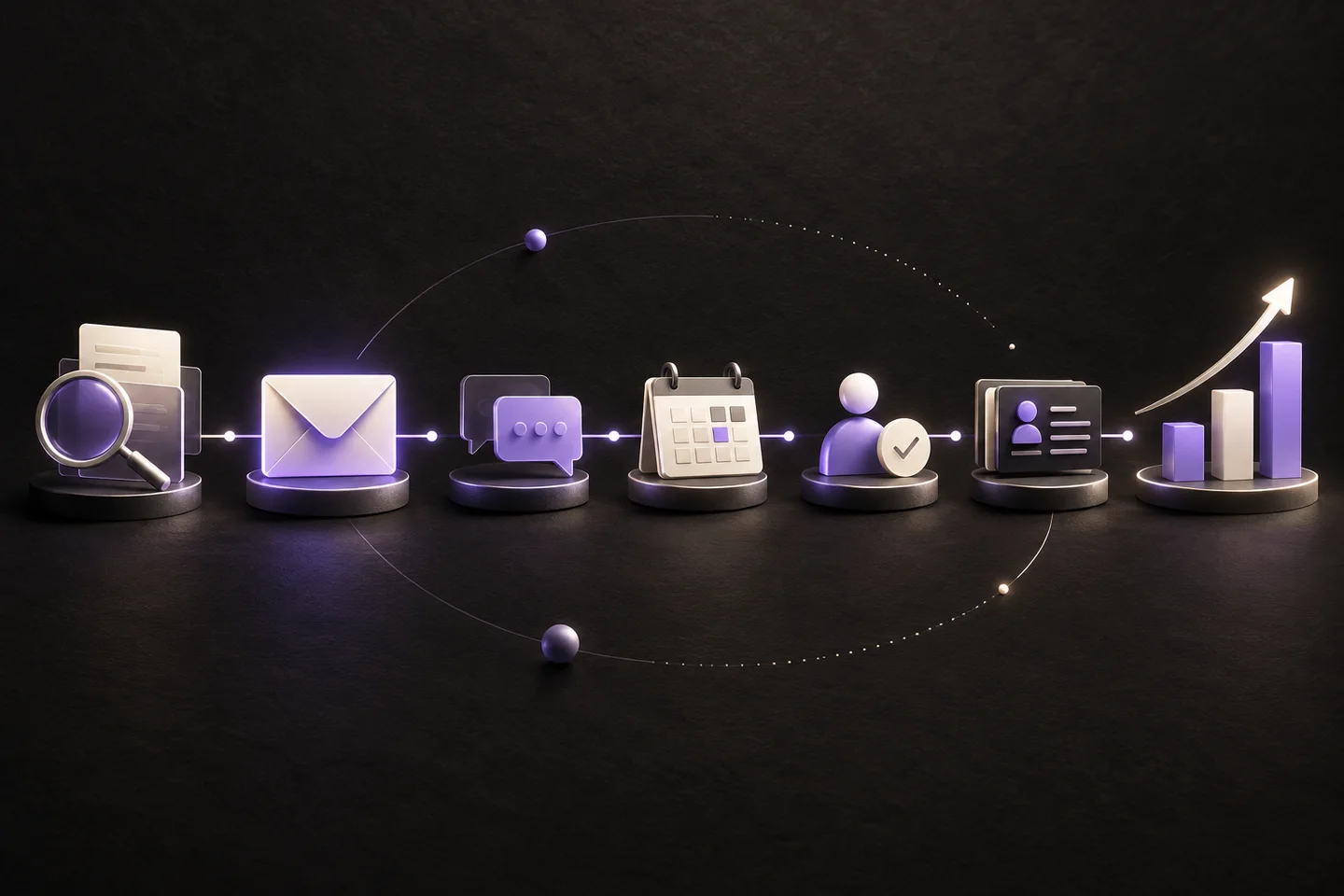
There is no single best cold email tool in 2026. Strong outbound runs on three layers: a sending platform (Instantly, Smartlead, lemlist, Reply.io or Salesforge), an enrichment and research layer (Clay or Apollo), and deliverability tooling for warmup and monitoring. The right pick depends on volume, team size and whether you want to operate the stack yourself.
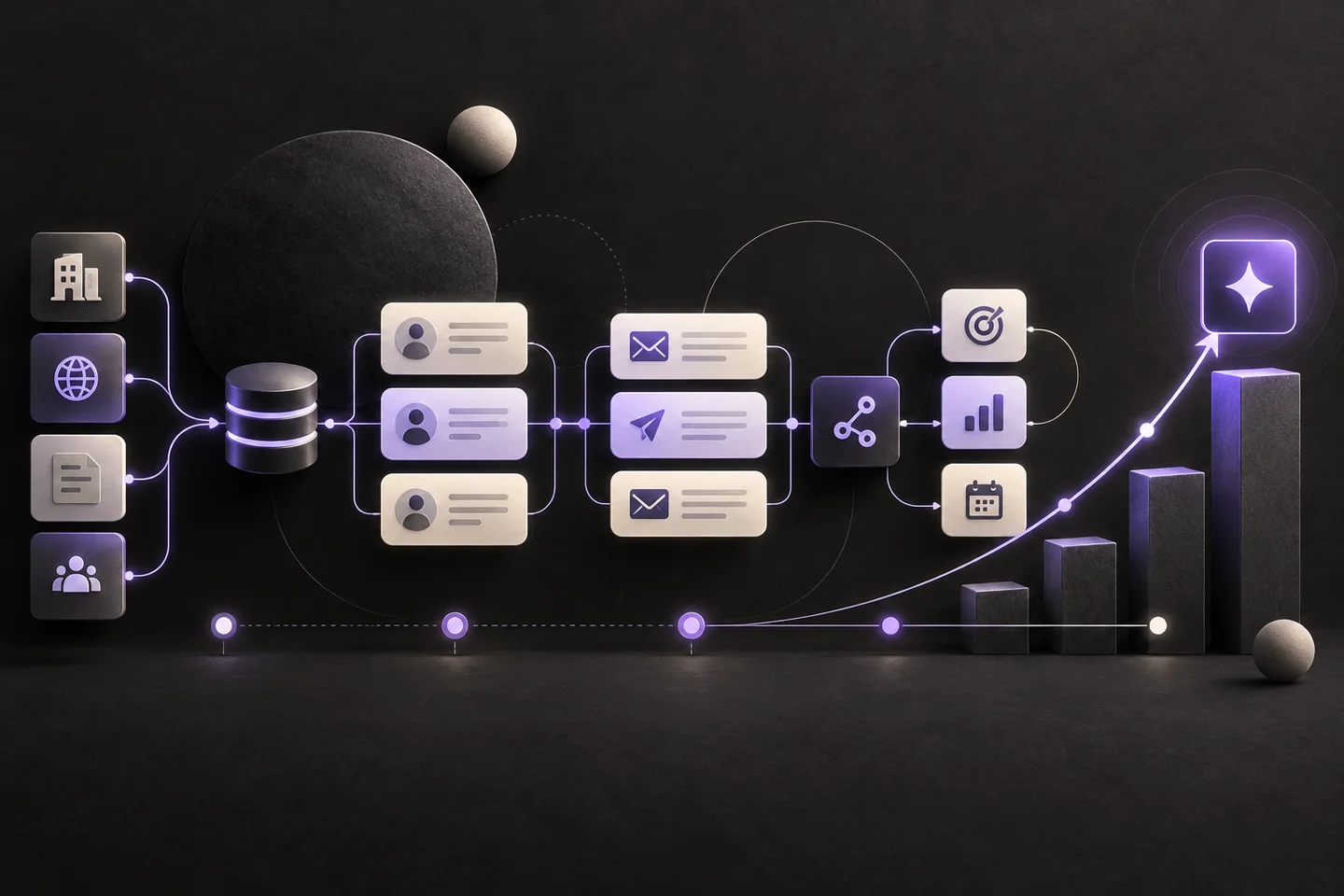
This Seqnced field guide turns that principle into an operating decision. It explains what to define before execution, how Seqnced applies the approach across a real account universe, what to inspect while the campaign is live, and where teams most often lose commercial signal.
01
How should you choose cold email software in 2026?
Seqnced publishes this guide. Seqnced is an outbound agency, not a software vendor, and does not sell any of the tools below. Every tool is described from its own published pages, and prices are the vendors' own list prices at the time of writing.
Start with volume and team shape, not feature lists. A founder sending 5,000 emails a month needs a very different setup than an agency running dozens of client campaigns. Most sending platforms now price by email volume rather than by seat, so your monthly send count is the first number to write down.
Then decide what you will buy versus build. Sending, data and warmup are sold separately by most vendors, and infrastructure like domains and mailboxes is often a separate purchase. Before comparing tools, confirm what each price actually includes.
Finally, set expectations. According to Instantly's Cold Email Benchmark Report 2026, the average cold email reply rate is 3.43%, with top performers exceeding 10%. Belkins' 2026 study of 7.5 million emails measured a 0.45% average reply rate against total sends. The two numbers describe the same campaigns with different denominators, so judge tools on pipeline, not on a single rate.
- Write down your monthly send volume and number of mailboxes
- Decide whether you need multichannel (email plus LinkedIn, calls, SMS)
- Check whether domains, mailboxes and warmup are included or extra
- Set a reply-rate target using a consistent denominator
02
Which sending platform fits your team?
Instantly positions itself as sales engagement and lead intelligence, with automated outreach, a B2B lead database, deliverability tools and an AI-powered CRM. Every Outreach plan includes unlimited email accounts and unlimited email warmup, and higher tiers add IP sharding and a private deliverability network. It is aimed at agencies, freelancers, founders and enterprises, and claims 50,000+ sales teams.
Smartlead calls itself cold email software for sales teams that run outbound at scale. It offers unlimited mailboxes and unlimited leads with no storage fees, handles DNS, warmups and sender rotation automatically, and includes a full white-label experience for agencies. Plans run from $39 per month for 6,000 sends to $379 for 500,000, and all plans include unlimited email accounts at no extra cost. We publish a detailed comparison of the two in our Instantly vs Smartlead article.
lemlist describes itself as the only platform you need to make outbound work, reaching leads via email, LinkedIn, calls, WhatsApp and SMS. Every seat includes lemwarm warmup, and its Email plan starts at $69 per month with unlimited users and email senders. lemlist says it is built for sales and growth teams that want to spend less time on manual work. Reply.io describes itself as a sales engagement platform with multichannel sequences across email, LinkedIn, calls and manual tasks, plus a separate product line for AI agents; its pricing page was not accessible at the time of writing, so we do not quote prices. Salesforge describes itself as combining AI, human workflows and infrastructure, with unlimited mailboxes and LinkedIn senders, free access to Warmforge, and an AI SDR called Agent Frank. Note that Salesforge requires you to purchase domains and mailboxes separately.
- Instantly: every Outreach plan includes unlimited email accounts and unlimited email warmup
- Smartlead: unlimited mailboxes with no storage fees, from $39/mo
- lemlist: multichannel with lemwarm included, from $69/mo
- Reply.io: AI sales engagement and AI SDR agents
- Salesforge: unlimited senders, infrastructure bought separately
Field guide
The decisions that connect the system
03
Who should not buy each platform?
No vendor publishes disqualifiers, so the honest way to answer this is to read each vendor's own description of who it is for and work backwards. Instantly and Smartlead both speak to agencies and high-volume teams; a single rep sending a few hundred emails a month may be paying for capacity they will not use.
lemlist and Reply.io describe themselves for sales and growth teams running structured sequences, often multichannel. If your motion is one-to-one executive outreach at very low volume with heavy research per message, a full sequencing platform may add overhead rather than remove it.
Salesforge explicitly serves everyone from one-person teams to Fortune 500 companies, but its model assumes you will manage separate infrastructure purchases. Teams that want domains, mailboxes and sending under one invoice should compare total cost, not sticker price.
- High-volume agencies: Instantly or Smartlead fit their own stated audiences
- Multichannel sales teams: lemlist or Reply.io
- Teams comfortable managing separate infrastructure: Salesforge
- Very low-volume, high-touch outreach: question whether a platform is needed at all
04
What do Clay and Apollo actually do?
Sending platforms deliver messages; they do not decide who deserves one. Clay describes itself as infrastructure to get any data, run agentic workflows and launch GTM plays. You can buy data from 200+ providers in one place, combine multiple providers for better coverage, and research companies and people with AI. Pricing is usage-based, with paid cards starting around $54 to $60 per month and scaling to $185 to $205 and beyond. Clay rewards teams willing to build workflows.
Apollo calls itself the AI GTM system for go-to-market teams, with 240M+ contacts and 30M+ accounts, waterfall enrichment, and AI agents that research, build lists, write outreach, follow up and book meetings. Plans run from a free tier to $49 and $99 per month, with enterprise pricing on request. Apollo suits teams that want list building, enrichment and sending in one system.
The practical split: use Clay when data quality and bespoke research justify a usage bill, and Apollo when you want an integrated database and sequencer at a low fixed price. Many teams run both at different stages.
- Clay: 200+ data providers, agentic workflows, usage-based pricing
- Apollo: 240M+ contacts, waterfall enrichment, plans from free to $99/mo
- Clay rewards builders; Apollo rewards speed
05
What deliverability and warmup tools do you need?
Warmup tools simulate engagement to build sender reputation. Instantly claims over 1,000,000 real email accounts in its deliverability pool, with a ramp that starts at 2 emails on day one and grows daily. lemwarm, included in every lemlist plan and sold standalone from $29 per inbox per month, warms across 20,000+ real domains and tracks a deliverability score. These figures use different units, accounts versus domains, so treat them as descriptions rather than a ranking.
Salesforge includes free unlimited access to Warmforge, which it describes as a premium email warmup and deliverability center with a free warming slot available standalone. MailReach focuses on a single job, getting emails into the inbox, with warmup, a spam checker for manual or automated seed testing, and a co-pilot. MailReach pricing was not published on its homepage at the time of writing.
For monitoring, Google's free Postmaster Tools dashboards show spam rate, reputation, message authentication and delivery errors for mail sent to personal Gmail accounts. Every serious setup should have it connected before the first campaign, not after problems appear.
- Instantly warmup: 1,000,000+ accounts in its pool (vendor claim)
- lemwarm: warms up inboxes across 20,000+ real domains, tracks deliverability scores and flags issues; every lemlist plan includes it
- Warmforge: included free with Salesforge
- MailReach: warmup plus spam testing
- Google Postmaster Tools: free monitoring, connect it first
06
What do Google and Yahoo require from bulk senders?
Since February 1, 2024, all senders to Gmail accounts must set up SPF or DKIM authentication. Google defines a bulk sender as anyone sending close to 5,000 messages or more to personal Gmail accounts within 24 hours, and once you cross that line you are permanently considered a bulk sender. Bulk senders must set up both SPF and DKIM, publish a DMARC policy, and align the From: header domain with either the SPF or DKIM domain.
Bulk senders must also support one-click unsubscribe via the List-Unsubscribe=One-Click header with a visible unsubscribe link in the body, and Google recommends honoring requests within 48 hours. On spam rates, Google's guidance is to keep rates reported in Postmaster Tools below 0.10% and never reach 0.30%. Google notes that enforcement ramped up from November 2025, with non-compliant mail facing temporary and permanent rejections. One nuance: the guidelines apply to personal Gmail accounts, not Google Workspace addresses, so check how much of your list uses personal Gmail.
Yahoo's Sender Hub sets parallel standards enforced since February 2024. All senders need SPF or DKIM at minimum and a spam rate below 0.3%. Bulk senders need both SPF and DKIM, a valid DMARC policy with at least p=none, header alignment, one-click unsubscribe and unsubscribes honored within 2 days. Any platform you buy should make authentication, one-click unsubscribe and list hygiene easy; if it does not, the tool choice does not matter.
- SPF and DKIM required for all bulk senders; DMARC too
- One-click unsubscribe (RFC 8058) required
- Gmail: spam under 0.10% target, 0.30% hard line
- Yahoo: honor unsubscribes within 2 days
- Crossing 5,000 Gmail messages a day makes bulk status permanent
07
Should you run this stack yourself or hire it done?
Buying tools is the easy part. The work is market mapping, account research, infrastructure setup, copy, reply handling and handoff to sales, run week after week. A tool stack does not tell you which 200 accounts matter this quarter or what to say to them.
For teams that prefer not to operate all of this internally, Seqnced is an agency, not software, that builds and runs outbound systems for B2B companies: sending infrastructure, cold email and LinkedIn, research, reply qualification and sales handoff. Founder Remo Duzkale's cumulative operating experience includes more than 10 million outbound emails, more than 100 campaigns and more than 3,000 meetings generated, which describes experience, not a promise of results.
If you have a marketing or sales operations person with time, buying Instantly or Smartlead plus Clay or Apollo is a reasonable path. If outbound needs to produce qualified meetings without adding headcount, an operated system is the alternative to evaluate.
Application framework
Turn the idea into an operating plan.
A useful guide should change what the team does next. Convert each principle into a decision, an owner, and evidence that can be reviewed after the campaign reaches the market.
Write down your monthly send volume and number of mailboxes
Instantly: every Outreach plan includes unlimited email accounts and unlimited email warmup
High-volume agencies: Instantly or Smartlead fit their own stated audiences
Clay: 200+ data providers, agentic workflows, usage-based pricing
Instantly warmup: 1,000,000+ accounts in its pool (vendor claim)
SPF and DKIM required for all bulk senders; DMARC too
For teams that prefer not to operate all of this internally, Seqnced is an agency, not software, that builds and runs outbound systems for B2B companies: sending infrastructure, cold email and LinkedIn, research, reply qualification and sales handoff. Founder Remo Duzkale's cumulative operating experience includes more than 10 million outbound emails, more than 100 campaigns and more than 3,000 meetings generated, which describes experience, not a promise of results.
What to measure
Evidence over activity.
- Research accuracy on a reviewed sample
- Time saved per approved account
- Classification precision for replies
- Qualified opportunities influenced by the workflow
Failure modes
Automating judgment
AI can organize evidence, but it should not invent claims, decide account fit, or make consequential commercial promises.
Scaling before quality review
A fast workflow multiplies bad inputs. Review a representative sample before moving into production.
Optimizing for unique sentences
Variation is not relevance. Research matters only when it changes the commercial reason for contacting an account.
Key takeaways
The decisions worth carrying forward.
- 01
How should you choose cold email software in 2026?: Seqnced publishes this guide. Seqnced is an outbound agency, not a software vendor, and does not sell any of the tools below. Every tool is described from its own published pages, and prices are the vendors' own list prices at the time of writing.
- 02
Which sending platform fits your team?: Instantly positions itself as sales engagement and lead intelligence, with automated outreach, a B2B lead database, deliverability tools and an AI-powered CRM. Every Outreach plan includes unlimited email accounts and unlimited email warmup, and higher tiers add IP sharding and a private deliverability network. It is aimed at agencies, freelancers, founders and enterprises, and claims 50,000+ sales teams.
- 03
Who should not buy each platform?: No vendor publishes disqualifiers, so the honest way to answer this is to read each vendor's own description of who it is for and work backwards. Instantly and Smartlead both speak to agencies and high-volume teams; a single rep sending a few hundred emails a month may be paying for capacity they will not use.
- 04
What do Clay and Apollo actually do?: Sending platforms deliver messages; they do not decide who deserves one. Clay describes itself as infrastructure to get any data, run agentic workflows and launch GTM plays. You can buy data from 200+ providers in one place, combine multiple providers for better coverage, and research companies and people with AI. Pricing is usage-based, with paid cards starting around $54 to $60 per month and scaling to $185 to $205 and beyond. Clay rewards teams willing to build workflows.
- 05
What deliverability and warmup tools do you need?: Warmup tools simulate engagement to build sender reputation. Instantly claims over 1,000,000 real email accounts in its deliverability pool, with a ramp that starts at 2 emails on day one and grows daily. lemwarm, included in every lemlist plan and sold standalone from $29 per inbox per month, warms across 20,000+ real domains and tracks a deliverability score. These figures use different units, accounts versus domains, so treat them as descriptions rather than a ranking.
Key terms glossary
- Human in the loop
- A workflow where a person reviews decisions that affect accuracy, risk, or the prospect relationship.
- Confidence threshold
- The minimum certainty required before an automated classification can trigger an action.
- Grounded research
- Research tied to traceable public evidence instead of unsupported model inference.
- Orchestration
- The controlled movement of data and tasks across research, campaign, inbox, and CRM systems.
FAQs
Questions teams ask before applying this.
Do I have to pay per email account or mailbox?
Smartlead states that all its plans include unlimited email accounts at no extra cost, and Instantly lists unlimited email accounts and unlimited warmup on every Outreach plan. Salesforge also offers unlimited mailboxes but requires you to purchase domains and mailboxes separately.
How long does email warmup take?
Instantly's warmup ramps gradually, sending 2 emails on day one, 4 on day two, 6 on day three and so on. Expect weeks, not days, before a mailbox handles real volume, and monitor reputation in Google Postmaster Tools throughout.
What is a bulk sender under Gmail rules, and does the status expire?
Google defines a bulk sender as anyone sending close to 5,000 messages or more to personal Gmail accounts within 24 hours. Once you meet that criteria even once, you are permanently considered a bulk sender.
Do Gmail sender guidelines apply to Google Workspace accounts?
No. Google states the email sender guidelines do not apply to messages sent to Google Workspace accounts; the requirements and enforcement apply to personal Gmail accounts.
What is a good cold email reply rate in 2026?
Instantly's 2026 benchmark report puts the average reply rate at 3.43%, with top performers above 10%. Belkins' study of 7.5 million emails measured 0.45% against total sends, showing how much the denominator matters when you benchmark.
Official sources reviewed
Verify each provider in its own words.
Seqnced publishes this comparison and places itself using the stated criteria. Competitor descriptions are limited to capabilities described on their official pages. Rankings are an editorial assessment, not an independent award.
- Instantly↗
- Instantly Pricing↗
- Instantly Email Warmup↗
- Instantly Cold Email Benchmark Report 2026↗
- Smartlead↗
- Smartlead Pricing↗
- lemlist↗
- lemlist Pricing↗
- lemwarm↗
- Reply.io Docs↗
- Reply.io Agents↗
- Salesforge↗
- Salesforge Pricing↗
- Warmforge↗
- MailReach↗
- Clay↗
- Clay Pricing↗
- Apollo.io↗
- Apollo.io Pricing↗
- Google Email Sender Guidelines↗
- Google Email Sender Guidelines FAQ↗
- Google Postmaster Tools↗
- Yahoo Sender Best Practices↗
- Belkins Cold Email Response Rates 2026↗
- Seqnced Cold Email Systems↗
- Seqnced Outbound Infrastructure↗
- Seqnced B2B Outbound Systems↗
Related Seqnced resources
See the capability, market, and proof behind the idea.
Put it into practice
Want this thinking applied to your market?
We build and run the outbound system, from the market thesis and account research through campaign execution and reply routing.
Explore managed B2B outbound systems →